October 2026
Highlights
Multi-Component OTA
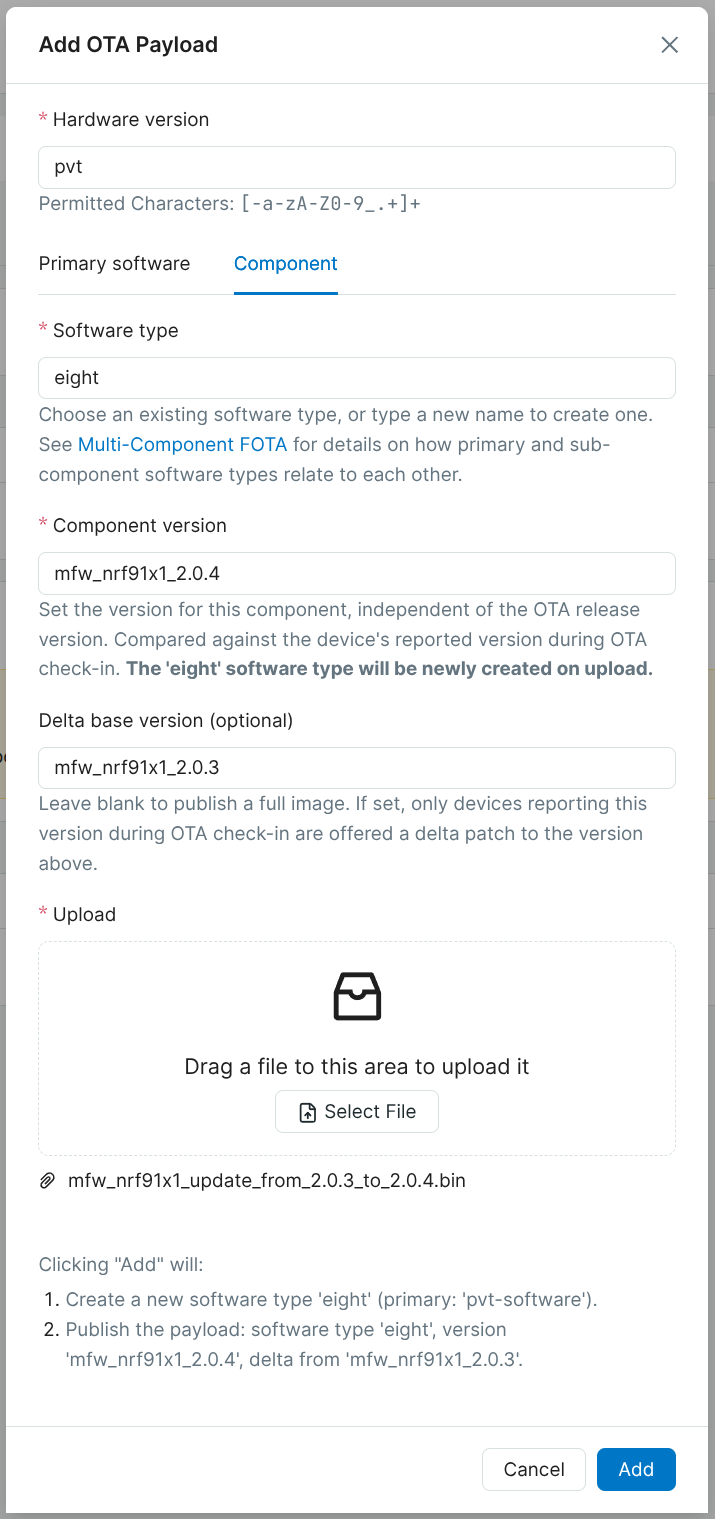
A single OTA Release can now carry artifacts for more than one updatable
component, such as an application processor and a cellular modem, or a gateway
and a downstream sensor MCU. The Add OTA Payload dialog has a new Component
tab where you choose the component's software type and set a component version
independent of the Release version. You can also upload per-component delta
payloads. Read the
Multi-Component OTA documentation to get
started, and use the new memfault-cli flags (below) to upload component
artifacts from CI.
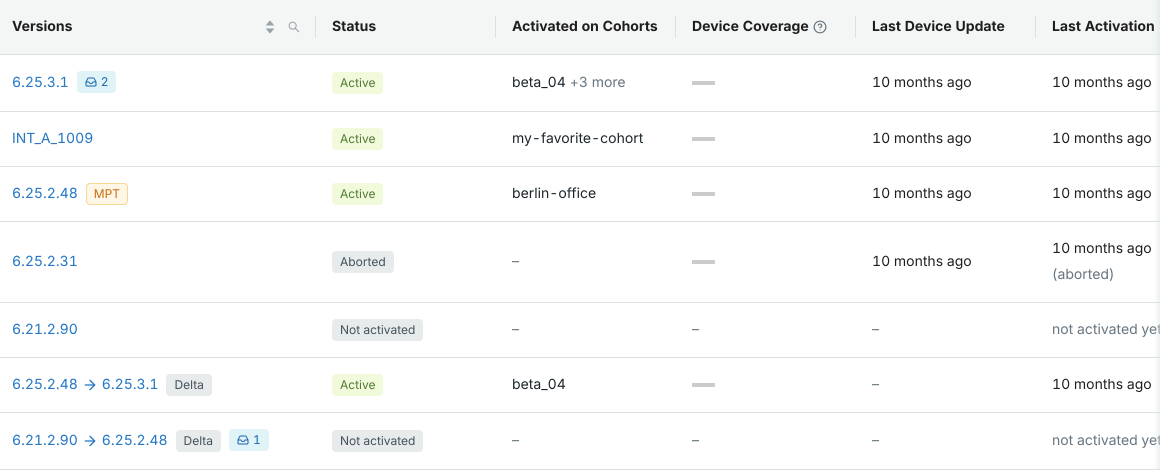
The Payloads table on a Release now shows the software type and version of each component, with the primary software type marked explicitly. Associations between hardware versions and non-primary software types can be edited in Project Settings.

The OTA Releases table has a new Status column, on by default, showing whether each Release is Active, Not activated, or Aborted. The Create Release dialog now marks required fields and links to guidance on picking a version that matches what your devices report.
General
-
Device Search can now sum a timeseries metric under Historical Data → Aggregated Metric, alongside the existing min, mean, and max. Use it to find, for example, devices with more than 100 disconnections in the last 3 days, or devices that used more than 500 MB of cellular data in the last 30 days.
-
Processing Log improvements:
- The Processing Log is now available through the public REST API, with paginated endpoints to list matching entries and event types. Learn more about the Processing Log.
- Coredump analysis errors now show the underlying error message (such as a missing hardware version).
- Traces dropped by an ignore rule are logged as informational "Trace matched an ignore rule" entries instead of errors.
- Linux and Android reboot entries include the device's boot ID.
-
Daily fleet counts API: new API endpoints return daily active, pending, and total device counts for a project, either for the whole project or broken down by cohort, filterable by date range and cohort. Per-cohort counts are now kept for one year (up from 21 days), and project-wide counts for three years.
-
Metric pie chart cards now accept string and boolean metrics, so you can chart distributions like the
bt_conn_disconnect_reasonmetric.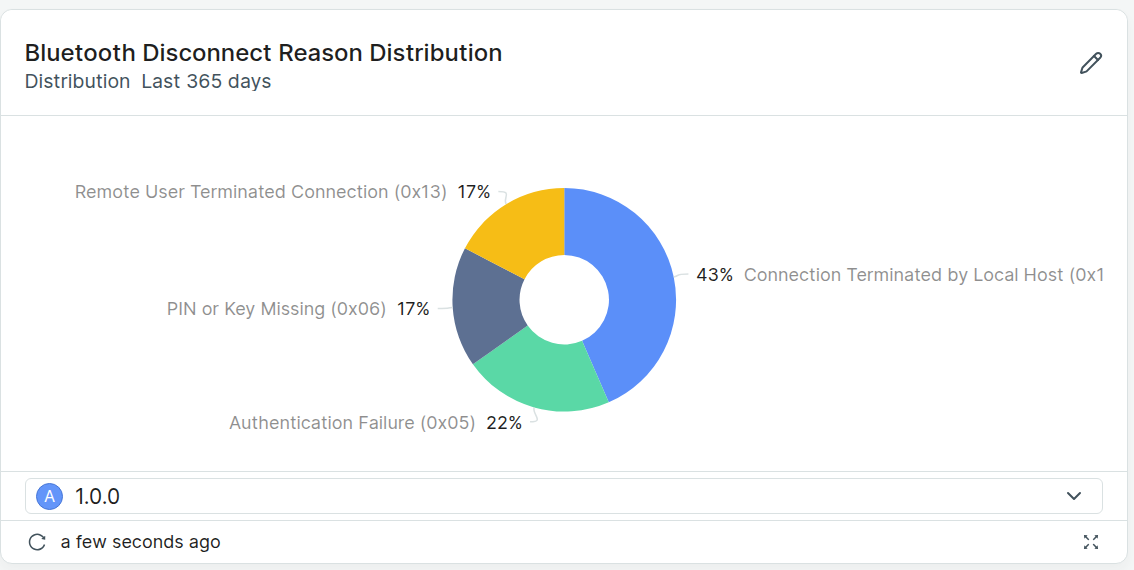
-
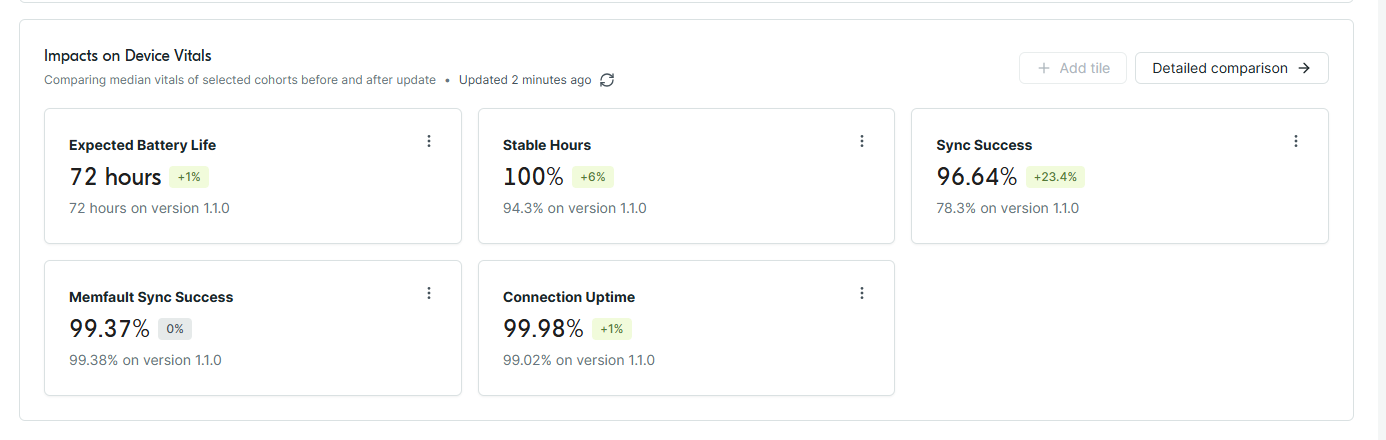
OTA Release Health vitals comparison cards now show the value on the previous version you are comparing against. The Target Devices tab shows more of each device serial, and hides the "offline before rollout" column when the Release has no active rollout.
-
Project renaming: project admins can now change a project's display name from Project Settings. The slug used in URLs and API calls doesn't change.
-
Trace view: clicking the device link on a trace now opens the device timeline at the moment the trace was captured.
-
Saved search dropdowns can now be searched and are paginated, for projects with many saved searches.
-
Dark mode now applies to the sign-in, single sign-on (SSO), password reset, registration, and onboarding pages.
-
Team invites no longer show an invite URL in the members table; invites are accepted from the email the invitee receives.
-
Session expiry: if you are signed out for inactivity in an organization that doesn't use SSO, you now see a "logged out because of inactivity" message with a link back to sign in, instead of an SSO error.
-
Zephyr coredumps now keep the full thread list when the running thread's control block is missing from the coredump.
-
Linux coredumps now show thread names, and stacktrace coredumps include application logs (with Linux SDK 1.30.0 or later).
-
Fixed saved issue search summary emails never reporting the top hardware version.
-
Fixed cohort software distribution counting multi-component devices more than once, which could show more devices than a cohort contains along with extra rows for non-primary software types.
-
Fixed relative date range filters in Device Search failing with an error when only the start of the range was edited.
-
Fixed device set drill-downs failing for very large device sets.
Device SDK Updates
MCU: [1.46.0] - 2026-10-23
See the full MCU SDK changelog.
- Added support for Memfault's alternate ECDSA-only API endpoints, which can
reduce memory use and round-trips when connecting. Opt in with
MEMFAULT_HTTP_USE_ECDSA_ENDPOINTS(orCONFIG_MEMFAULT_HTTP_USE_ECDSA_ENDPOINTS=yon Zephyr). - Added ESP32 SPI flash coredump storage for Zephyr, enabled with
CONFIG_MEMFAULT_COREDUMP_STORAGE_ESP32_FLASH=y. Coredumps can optionally be stored at the end of the MCUboot secondary slot, so deployed devices can gain flash coredump storage through OTA without a partition table change. - Zephyr heap stats can now track shared multi-heap allocations, such as SPIRAM-backed buffers on ESP32. Heap stats are now enabled by default on ESP32 targets.
- Improved Zephyr coredump captures when thread control blocks live in
.data. - Fixed a race in the nRF Connect SDK FOTA start functions when called from
multiple threads or during an active download; they now return
-EBUSY. - Fixed a compatibility issue with the ESP-IDF component on ESP-IDF v6.0 and later.
Linux: [1.30.1] - 2026-10-21, [1.30.0] - 2026-10-13
See the full Linux SDK changelog.
- Stacktrace coredumps now include application logs, like regular coredumps
already do. The number of lines is set by
coredump.log_lines(default 100). If logs must not leave the device, set it to0before upgrading. - Added collection of thread names for Linux coredumps.
- Added a
--suppress-settings-printflag to avoid printing the full settings on each launch and reload. - Bumped
rustls-webpkito 0.103.16, which stops trusting eMudhra's compromised intermediate CA certificates.
CLI: [1.12.1] - 2026-10-27, [1.12.0] - 2026-10-26, [1.11.0] - 2026-10-14
See the full CLI changelog.
- Added multi-component OTA support to
upload-ota-payload. Pass a non-primary--software-typewith--component-version, and optionally--component-base-versionto upload a per-component delta payload. - The CLI is now also available as
nrfcloud, with new commands for onboarding nRF Cloud devices, such asnrfcloud device create. - Raised the minimum
certifiversion to one that no longer trusts eMudhra's compromised intermediate CA certificates.